
Description
Some time now aspired to make a trip to Crestuma, village located in the Douro River bank, near the dam called Crestuma – Liver, that is about 30 km from Porto. My intention was to photograph a large plant – The Ribbon Factory and Cotton Spinning – A. C. da Cunha and Morais.
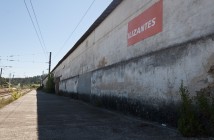
Already near the village were identified from a distance the huge structure of this factory that stood the houses that make up this village. The access to its premises was not easy but with the help of a local resident who, coincidentally, had been a former employee, I managed to access the said space. Due to the poor state of buildings, for the sake of security I did not accede, or tried, climb to the upper floors, as suggested by that person.
Over the years the looting and the wickedness of those who stayed has some spaces dens of dirt and danger, damaging, like this, all the loot and photographic work. Anyway, it was possible to access some sites which can give an idea of the greatness of this factory that, certainly employed hundreds of workers, allowing Crestuma village to develop economically along the Douro River bank.
Typology
Factory
Location
Crestuma – Vila Nova de Gaia
Date of Visit
10-06-2014
Home Use
Production
Historical Notes
Since the seventeenth century Crestuma was seen as a densely populated industrial site by large factories, especially in the area of iron, spinning, cotton and weaving jutting, thus, in the panorama of national economic development.
The history of this factory that dates back to 1790, begins with the Verguinha Factory and Crestuma Iron Arches, unit that belonged to the Agriculture General Company of Alto Douro Wines. This factory was intended to support the agricultural industry, there are essentially manufactured iron arcs for kites and Tone, it is also known that the produced casting machines for other industries. In 1825, employed about 40 workers and was a foundry equipped with the latest technology at the time. Later, and a socio-economic scenario of crisis, the debts accumulated this company up and the plant was sold, after giving rise to the appearances of spinning mills, one of which we are here referring.
The Ribbon Factory and The Cotton Spinning. C. da Cunha and Morais, was not a simple factory, it also included a large plot called Quinta da Estrela which was built magnificent homes for engineers and their families. Augustus Caesar, being a person of great economic power in Crestuma and Porto, also enabled the construction of the Church of Crestuma and several houses for their workers. On the other hand, the development of spinning and cotton industry opened the door to the study and creation of new industrial machines world-famous.
Another important event happened at that time, was the fact that it was built, to use this factory, one of the first processing station (PT) in Gaia, later, lead to the end of the use of rivers and streams and the beginning of the use of electricity for industrial purposes
And now photos…



9 Comments
This place is fantastic!
Excellent Post, both the research work as the photographic work.
Bartholomew
Thanks for the comment.
Cpa
Boa tarde; a little more historical accuracy. You are confusing the Wiring Factory Crestuma, with The Factory. C. Morais da Cunha
Good afternoon Mr.. Francisco
I appreciate your comment about this job. However, as can see the abandoned documents photographed, it is actually ribbons Factory and Cotton Spinning – With AC and Morais. There, slightly above this location, another great plant abandoned with the acronym CFC (Crestuma Wiring Company). I think, later, there back to try shooting and historicizing, if possible, this structure.
Cps
My dear; this text has nothing to do with the factory A. C. Morais da Cunha, but with the manufactures of Crestuma, which as I said is more up.
"The history of this factory that dates back to 1790, begins with the Verguinha Factory and Crestuma Iron Arches, unit that belonged to the Agriculture General Company of Alto Douro Wines. This factory was intended to support the agricultural industry, there are essentially manufactured iron arcs for kites and Tone, it is also known that the produced casting machines for other industries. In 1825, employed about 40 workers and was a foundry equipped with the latest technology at the time. Later, and a socio-economic scenario of crisis, the debts accumulated this company up and the plant was sold, after giving rise to the appearances of spinning mills, one of which we are here referring to. "
Best regards
Francisco
From the pictures I see (basically the ground floor of the main building and little else) see also caught you the truth vigilante? I went before that date and saw roughly what your, I was eager to enter the palace and buildings uppermost.
Hello Rafa616
Thanks for the comment. When I visited this factory have not found any vigilante, but access was helped by a former employee. As for buildings and palace which are above, could not visit because they are already sold.
Cps
Dear author. Francisco is right. The manufacture of rings or arcs were made in that came to call Wiring Company Crestuma.
Boa tarde. I wonder if,,pt,perhaps,,pt,ever photographed the Ferry Fabric Factory,,pt,in Sobrado,,pt,an old factory by the Ferreira river,,pt,today our property and it was built around,,pt,In the winter,,pt,the turbines were driven by the driving force generated by the waterfall from a channel diverted from the Ferreira river,,pt,still existing,,pt,when there was not enough flow,,pt,used steam from the boiler,,pt,still existing today the,,pt,chimney,,pt,Although no machinery exists today,,pt,It is still remarkable the structure in wrought iron that still supports the roof,,pt,The floor is raised by means of,,pt,Moutões,,pt,granite,,es,where the beams that support the wooden floor rest,,pt,still existing in part,,pt,It has a chapel dedicated to the patron saint St. Anthony,,pt,open to religious worship,,pt, porventura, fotografou alguma vez a Fábrica de Tecidos da Balsa, em Sobrado, Valongo, uma antiga fábrica junto ao rio Ferreira, hoje nossa propriedade e que foi construída por volta de 1870. No Inverno, as turbinas eram accionadas pela força motriz gerada pela queda de água de um canal desviado do rio Ferreira, ainda existente; quando não havia caudal suficiente, recorriam ao vapor da caldeira, existindo ainda hoje a “chaminé”. Embora nenhuma maquinaria exista hoje, é ainda notável a estrutura em ferro trabalhado que suporta ainda hoje o telhado. O piso é elevado por meio de “moutões” de granito, onde assentam as vigas que suportam o soalho em madeira (ainda existente em parte). Tem uma capela dedicada ao padroeiro Santo António, aberta ao culto religioso, where Mass is celebrated for the people of the place of the ferry every month,,pt,By the time of St. Anthony's Day,,pt,of June,,pt,the people organize big festivities,,pt,in the evening,,pt,ranchos,,en,groups of known musical artists,,pt,marches and rockets,,pt,Under the floor you can still see the channels that,,pt,of other conduct,,pt,distributed the water,,pt,also from the Ferreira River by several points,,pt,for various purposes,,pt,If you want to shoot,,pt,please contact us,,pt,Best regards and at your service,,pt,monteiro.rocha1@gmail.com,,en. Por altura do dia de Santo António, 13 de junho, o povo organiza grandes festividades, com noitada, ranchos, grupos de artistas musicais conhecidos, marchas e foguetes.
Por baixo do soalho podem ainda observar-se os canais que, de outra conduta, distribuíam a água, também do rio Ferreira por diversos pontos, com finalidades diversas.
Se pretender fotografar, queira, por favor entrar em contacto connosco.
Melhores cumprimentos e ao dispor
José Manuel Monteiro da Rocha (917511780 – monteiro.rocha1@gmail.com)